


Navigating the Unseen: Panama Drought Crises, Israel-Hamas Conflict, Black Sea Port Disruptions
When it comes to managing complex supply chains, you've probably heard the old saying, "You can't manage what you can't see." In today's ever-changing world, this wisdom holds truer than ever. From geopolitical tensions to climate change, and congested ports, knowing what's happening and where is the key to effective management and communication with stakeholders.
Although 2023 has been marked by a slowdown in freight in the shipping sector, it is continuing to face various disruptive incidents. Left unmonitored, these disruptions could worsen the existing challenges faced by stakeholders in the midst of the ongoing freight recession.
Here's what you need to see and monitor right now:
The Panama Canal Drought Crisis
The Panama Canal authorities have recently announced additional cuts to vessel traffic through the canal due to the ongoing drought plaguing the region. These recent water conservation efforts have significantly reduced daily crossings, affecting daily sailings and creating a bottleneck of vessels waiting to cross the canal. Typically, about 35 vessels pass through the canal every day. However, authorities have announced their plan to reduce daily sailings to 18 ships per day by February 2024.
Stay Updated with SeaVantage Port Insight's Live Monitoring
The Israel-Hamas Conflict
While the ongoing conflict between Israel and Hamas has yet to severely impact global supply chains, the conflict could pose additional risks if it continues to drag on. The situation remains uncertain as the Israeli ports of Ashdod and Haifa account for only 0.4% of global container throughput. The port of Ashkelon, located about 10km from the northern border of the Gaza Strip, is currently closed. There are increased waiting times at the port of Ashdod due to heightened security checks and a shortage of labor.
Stay Informed with SeaVantage Port Insight’s Live Monitoring
Black Sea Port Disruptions
The prolonged conflict between Russia and Ukraine continues to disrupt commercial vessel movement in the Black Sea region. Over 600 days have passed since the beginning of the Russian-Ukraine war. More recently, Russia once again targeted the Black Sea port of Odessa, and both Russia and Ukraine have warned of attacks on commercial vessels heading to the region. These heightened threats of attacks on vessels from both sides could further exacerbate the challenges faced by vessels navigating the region.
In navigating today's complex supply chain landscape, staying informed is not just a best practice – it's a necessity. The adage "You can't manage what you can't see" has never rung truer, especially considering the challenges faced in the shipping sector amid the ongoing freight recession. The recent Panama Canal drought crisis, the Israel-Hamas conflict's potential impact, and the persistent disruptions in the Black Sea region highlight the critical importance of real-time monitoring. With SeaVantage Port Insight's live monitoring, staying updated on these developments is your proactive strategy to anticipate and navigate the ever-evolving challenges in the global supply chain.
What is SeaVantage Port Insight?
SeaVantage's Port Insight Data provides end-users like you with access to real-time metrics and a live congestion map concerning vessel traffic at ports worldwide. The underlying system integrates multiple different data sources, mostly proprietary, into one single and consistent system to predict and visualize vessel activity and congestion in real-time.
It provides users with both historical and real-time information about port performance and activity. The insights from this dashboard include predicted incoming vessel traffic, anchorage insights, and berthing insights for the port, specific terminals, or ship types.

Advantages of SeaVantage Port Insight
Port Insight enables users to optimize route planning and scheduling, make informed decisions about prioritizing ports, and dynamically adjust schedules as needed.
● Efficient planning
● Reduced delays and costs
● Improves resource allocation
● Enhanced customer service
● Risk mitigation
Try it out on SVMP

팬스타 아크로호가 지난 8월 22일 북극항로 시범운항을 시작했습니다. 국내 최초 컨테이너선 북극항로 운항 현황과 상업성 검증 항목, 화주·포워더가 주목할 사항을 정리합니다.
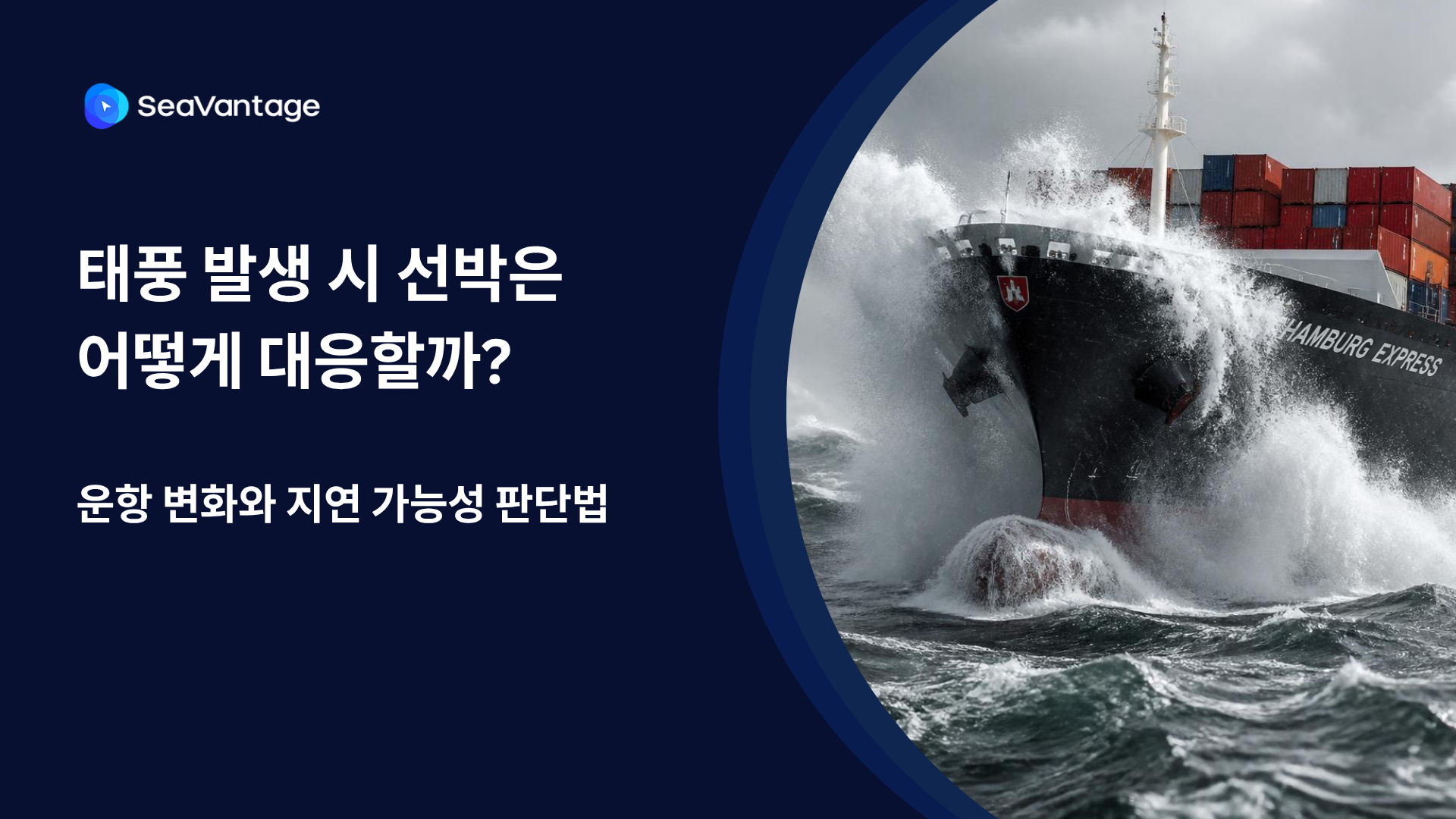
태풍 발생 시 선박은 우회·감속·대기 등 서로 다르게 대응합니다. AIS 항적과 ETA·PTA·PTB, 항만 혼잡 데이터를 활용해 해상운송 지연 가능성을 판단하는 방법을 알아보세요.
선사 ETA가 바뀌기 전에 일정 변동 가능성을 미리 파악할 수 있을까요? PTA와 ETA의 차이, 구간별 확인 방법, 실무 대응 시나리오 5가지를 소개합니다.
TPEB rates 2026, Indian Subcontinent ocean freight capacity, Strait of Hormuz shipping disruption, schedule reliability ocean carriers
What's driving ocean freight peak season 2026 — rates, surcharges, booking windows, and how to avoid missed inventory deadlines.

PTA is SeaVantage's predictive signal for ocean freight visibility. Learn how to read PTA alongside ETA, leg by leg, to catch delays before they happen.

.png)


